Arjuna Releases

blog-image
Arjuna Releases

New Year, New Phone? Here’s How to Secure Your Device in 2026

New Devices, New Vulnerabilities Many people start the New Year with a new phone. While it feels like a fresh start, new devices are often more vulnerable due to unprotected settings and rushed installations. Cybercriminals target new phones aggressively. Common Mistakes People Make with New Phones These small mistakes can open the door to big threats. Essential Security Setup for 2026 Update Immediately System updates fix security loopholes that attackers exploit. Limit App Permissions Only allow what’s necessary. Secure Your Links Most mobile attacks begin with a malicious link. Arjuna scans URLs before they open, helping you stay protected across all platforms. Why Mobile Security Matters More Than Ever Your phone holds: Protecting it should be a priority, not an afterthought. Start the Year Protected Security is not about restriction, it’s about freedom without fear. Whether it’s a new phone or a new year, secure your digital life with Arjuna and step into 2026 with confidence.

Arjuna Releases, Phishing

This Is How Phishing Looks in Real Life — And Why Real-Time Protection Matters More Than Ever

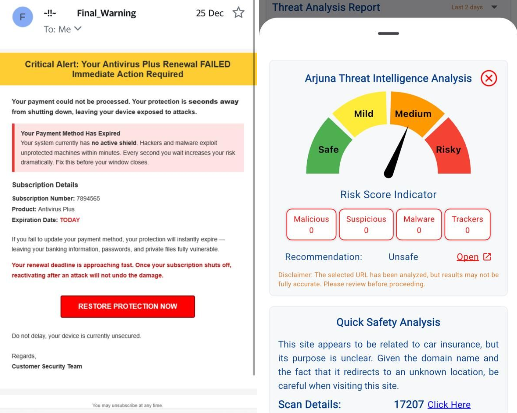
Phishing scams have evolved. They are no longer easy to spot emails filled with spelling mistakes or suspicious formatting. Today’s phishing attacks are polished, urgent, and designed to exploit human psychology in seconds. A recent real-life example highlights just how convincing these scams have become — and why relying on “being careful” is no longer enough. A Common Morning, A Dangerous Email The email looked urgent. It claimed that an “Antivirus Plus renewal FAILED” and warned that device protection was “seconds away from shutting down.” The message was carefully crafted to trigger fear and immediate action. It included: At first glance, it appeared legitimate. And that is exactly why phishing works. Why Modern Phishing Is So Effective It Uses Psychology, Not Poor Design Phishing today isn’t about obvious mistakes. It’s about pressure, timing, and emotional manipulation. Scammers know that fear reduces rational thinking. When users feel rushed, they are far more likely to click without verifying. It Mimics Trusted Brands and Services From antivirus renewals to bank alerts and delivery updates, phishing emails often impersonate services people already trust. This familiarity lowers suspicion and increases the chance of interaction. The First Click Is Where the Damage Happens Most cyber damage occurs the moment a malicious link is clicked. That single action can lead to credential theft, malware installation, financial loss, or identity compromise. How Real-Time Protection Changes the Outcome Before there was even time to react, Arjuna flagged the link as unsafe and displayed a clear risk warning. Instead of panic, there was clarity. This is the power of real-time protection: Security should not depend on users always making perfect decisions under pressure. It should intervene at the exact moment of risk. Why “Be Careful” Is No Longer a Strategy Telling users to “be careful” assumes unlimited attention, technical knowledge, and emotional control. In reality, people are busy, distracted, and human. Effective cybersecurity must: Protection should support users, not test them. How to Recognize Phishing Attempts If an email or message: Pause. Verify. Do not react under pressure. Legitimate organizations do not force instant decisions through fear. Real Threats Don’t Wait — And Protection Shouldn’t Either Phishing attacks are becoming faster, smarter, and more convincing. The window between receiving a message and making a mistake is often just seconds. That is why real-time protection is no longer optional. It is essential. With proactive threat detection and instant risk alerts, users can move through the digital world with confidence instead of caution. Because when threats act instantly, protection must do the same. Download Now!

Arjuna Releases

The Rise of Wedding Invitation Scams in the Digital Era

Weddings are moments filled with excitement, love, and celebration. But as heart-warming as they are, they have also become a new playground for cybercriminals. One of the most rapidly increasing online threats today is the wedding invitation scam. What looks like a sweet digital invite often turns out to be a dangerous phishing attempt. What is a Wedding Invitation Scam? A wedding invitation scam is a phishing tactic where victims receive a digital message, email, or link claiming to be a legitimate wedding invitation. It may include RSVP links, venue details, pictures of the couple, or downloadable attachments. The aim is to lure the recipient into clicking or downloading malicious files. The catch is simple: once the victim interacts with the link, they unknowingly give cybercriminals access to their personal data, login credentials, or even financial information. Why Do People Fall for This Scam? Personal and Sentimental Appeal Wedding invitations carry emotional value. People naturally trust anything associated with celebrations and relationships, making them less suspicious and more likely to click. Social Media Exposure Details of weddings, guest lists, and relatives are widely available online. Scammers gather names, dates, locations, and use them to craft realistic invitations that feel personal. Growing Trend of Digital Invitations With online RSVP systems and e-cards becoming common, receiving a digital wedding invite no longer feels unusual. That familiarity is exactly what scammers exploit. What Happens After You Click the Link? Once the recipient engages with the fraudulent invitation, several risks unfold. Malware Installation The downloaded file may install spyware or ransomware into the device. Credential or Data Theft Fake login pages steal email access, bank details, and social credentials. Unauthorized Transactions and Identity Misuse Personal information may be sold or used to carry out further online fraud. The victim often realizes the threat only after damage has already occurred. How to Stay Safe Awareness is the strongest defense. Before interacting with any digital wedding invitation: Always verify the sender Contact the couple or family directly to confirm the invite. Inspect links carefully Avoid clicking URLs that appear strange or mismatched. Never download unverified attachments If it feels suspicious, trust your instinct and exit. Final Thoughts Wedding invitation scams remind us that cybercrime has evolved beyond financial and corporate environments. It now hides within celebrations, emotions, and personal connections. Staying vigilant, thinking twice before clicking links, and validating authenticity can prevent a joyful moment from turning into a security threat. Protect yourself from wedding invitation scams and other phishing threats by using Arjuna — download now

Arjuna Releases

Wedding Gift Scams: When Celebrations Become a Gateway to Cyber Fraud

Gifts are a symbol of love, blessing, and goodwill in weddings, but in the digital world even generosity is exploited. A growing number of cybercriminals now use wedding gift scams to trick people into sending money, sharing card details, or clicking fake registry links. What feels like a kind gesture often becomes a costly mistake. What Is a Wedding Gift Scam? Wedding gift scams typically involve a fake message or website claiming to represent the bride and groom. The victim receives a link asking them to contribute to an online gift registry, pay for a wedding fund, or send money as a “surprise gift.” The communication often appears affectionate, polite, and sentimental — exactly what you expect around a wedding. But instead of gifting happiness, the victim unknowingly gifts money to a scammer or exposes sensitive financial information. How the Scam Usually Begins Fake Gift Registry Links The victim receives a link via email, WhatsApp, or social media asking for contributions. The website looks polished but is designed only to collect payment details. Emotional Phrases to Lower Guard Messages like “It would mean a lot to them” or “Let’s surprise the couple” are common emotional triggers that push people to act quickly. False Sense of Urgency Scammers add phrases like “Final day to contribute” or “Limited slots left,” creating pressure and reducing rational thinking. Why Wedding Gift Scams Work People Love to Give Gift-giving is a warm human impulse. Scammers exploit this generosity by adding emotional context to their requests. Trust by Association If the scammer uses real names or references visible online, the victim may assume it is authentic. Digital Payments Make Fraud Easy UPI, card links, and online registries make sending money fast — but also irreversible when it lands in the wrong hands. Consequences of Falling for This Scam Victims may lose money, expose UPI or card details, or become targets for further fraud. If login credentials are entered, scammers may access email accounts or digital wallets. In some cases, attackers expand their reach by contacting other guests using harvested contacts. How to Protect Yourself Always verify before sending money Speak directly to the couple or a close family member to confirm whether a gift registry exists. Do not trust links blindly Look for spelling errors, strange URLs, and payment pages asking for unnecessary details. Avoid emotional pressure tactics Scammers intentionally push urgency. Take a moment to think before you pay. Final Thoughts Wedding gift scams remind us that even generosity needs caution in a digitised world. Before contributing to any online registry or fund, verify the source, check the link, and stay alert — a few seconds of awareness can save you from a major financial loss. Download Arjuna to safeguard yourself from malicious links and fraudulent payment pages.

Arjuna Releases

Honeymoon Booking Scams: When Dream Trips Turn Into Digital Traps

A honeymoon is one of the most anticipated parts of a wedding. Newlyweds look forward to a peaceful escape, a destination to unwind, celebrate love, and begin a new chapter. But while couples plan the perfect getaway, cybercriminals plan something else entirely. Honeymoon booking scams have become one of the fastest-growing online fraud trends, trapping couples with irresistible travel offers, fake hotel listings, and discounted packages that disappear as soon as payment is made. What Is a Honeymoon Booking Scam? A honeymoon booking scam is a fraudulent tactic where scammers create fake travel websites, advertisements, or agents offering luxury honeymoon packages at unbelievable prices. Victims, hoping to save money during expensive wedding seasons, fall for these deals without realising the risks. Once the payment is completed, either the booking never exists, or the hotel denies any record of reservation. It is a scam that preys on emotional excitement and hopes of the perfect start to marriage. How These Scams Usually Operate Fake Travel Websites and Social Ads Scammers build professional-looking landing pages with attractive visuals, testimonials, and limited-time offers. The urgency makes couples act fast. Impersonation of Travel Agencies Attackers may pose as well-known agencies, sending confirmations that look legitimate but lead to untraceable payment routes. Advance Payment Requests Scammers insist on full payment upfront, often via UPI, wallet transfers, or wire payments that cannot be reversed. Why Couples Easily Fall for This Fraud Attractive Discounts Travel costs are high during wedding season. A discount of 40 to 60 percent sounds like a dream, and dreams reduce caution. Emotional Excitement The honeymoon is a milestone. When emotions lead, verification often takes a back seat. Urgency Tactics Statements like “only two rooms left” or “offer ends in two hours” create pressure. Rushed decisions favour scammers. What Happens After the Money Is Sent Victims soon realise the booking is fake. There may be no reservation, no refund, and no customer support. In more damaging cases, scammers store personal data like passport scans, card details, or email credentials, risking identity theft or further attacks. The disappointment is emotional as well as financial. How to Protect Yourself Verify Before Paying Contact hotels or airlines directly. If the deal doesn’t exist elsewhere, it may be a scam. Avoid Upfront Payments to Unknown Accounts Legitimate travel portals allow secure transactions through trusted gateways. Research Reviews and Website Legitimacy Look for independent reviews, SSL certificates, and company registration details. Final Thoughts A honeymoon should begin with happiness, not regret. Careful research, verification, and secure payments are essential to prevent digital honeymoon traps. Protect yourself by letting Arjuna screen deceptive links and fraudulent booking pages. Start safe and stay protected

Arjuna News, Arjuna Releases

Vibe Hacking Is Here: What It Means for You (and How to Stay Safe)

AI is a superpower, but like any powerful tool, it can be used for good or bad. Cybersecurity experts are now sounding the alarm about a rising form of AI-driven crime called “vibe hacking” (also described as an evolution of AI-enabled attacks). These attacks automate and scale harmful activity, from drafting ultra-convincing phishing messages to orchestrating personalized extortion, and they’re becoming cheaper and easier to buy on dark-web marketplaces. Source: Economic Times Below I’ll explain what vibe hacking is, why it’s different (and scarier) than older scams, and most importantly, practical steps you can take today to protect your digital life. I’ll also show where intelligent mobile protection like Arjuna — The Cyber Shield can help, without the tech jargon. What Exactly Is Vibe Hacking? “Vibe hacking” describes how criminals are using generative AI models and agentic AI tools to automate the whole attack lifecycle. Imagine a toolkit that writes believable phishing emails, builds malicious code, identifies vulnerable targets, and even chooses which files to steal, all with minimal human input. Researchers and industry leaders warn that these tools can be purchased for surprisingly low prices and can bypass legacy safety systems. Source: Economic Times A few worrying examples called out by experts include AI coding assistants being exploited to steal data from organizations and “Evil LLMs” like FraudGPT and WormGPT being used to craft polymorphic malware, deepfakes, and tailored social-engineering campaigns. Source: Economic Times Put simply, attackers can now scale campaigns that used to require teams of skilled hackers, and they do it much faster and cheaper. Why This Is a Turning Point There are three reasons vibe hacking is different from the phishing and malware we’ve seen before: That combination, fast, convincing, and cheap, is exactly what makes vibe hacking so dangerous. It widens the attacker pool and makes large, automated scams much more likely. What These Attacks Look Like in the Wild Vibe hacking can show up as hyper-personalized phishing emails that reference your recent purchases, colleagues, or calendar events; deepfake voice calls asking for verification codes or confirming sensitive transactions; malicious agents that crawl shared documents and automatically inject poisoned prompts or hidden instructions; or rapid ransomware campaigns where AI automates reconnaissance, payload creation, and distribution. Because these attacks can be so tailored, the usual “look for spelling mistakes” advice isn’t enough anymore. How to Protect Yourself – Practical and Simple You don’t need to be an expert to reduce your risk. Here are effective, everyday steps: And a critical step many people skip: use a proactive mobile security tool that scans links and risky behaviour in real time. Where Arjuna Fits – Protection That Actually Helps Awareness is necessary, but it’s not sufficient against vibe hacking’s speed and scale. That’s where Arjuna — The Cyber Shield comes in. Arjuna provides real-time scanning of links, messages, and app behaviour so threats are identified before they can act on your device. When AI-driven campaigns attempt to deliver malicious links, deepfake payloads, or convincing phishing pages, Arjuna raises an immediate alert, blocking unsafe interactions and preventing automatic downloads or credential capture. In practice, that means you don’t have to recognize every sophisticated scam yourself; Arjuna’s detection layer does the heavy lifting, giving you time to verify and act calmly. A Few Extra Tips for Teams and Organizations If you manage a small business or a team, consider these extra steps: train staff on AI-amplified social engineering (use simulated phishing that mirrors modern, targeted techniques); review access to sensitive systems and rotate credentials, especially for APIs and shared repositories; monitor for “tool poisoning” risks to ensure internal models do not ingest untrusted data that could contain malicious prompts; and work with vendors to ensure their AI products include safety testing and red-teaming. Final Thought Vibe hacking is a wake-up call: AI has made cybercrime cheaper, faster, and far more convincing. But the solution isn’t to panic; it’s to adapt. By combining cautious habits (pause, verify, update) with layered protection, including intelligent tools like Arjuna — The Cyber Shield, you can reduce exposure and stay one step ahead of automated attacks. If you want to take immediate action, start with two things today: enable MFA on your critical accounts and install a real-time mobile security app that scans links and risky app behaviour. The future of cybercrime is automated; your defense should be too.

Scroll to Top